قائمة المنتجات

اتصل بنا

  • هانغتشو هوتيد للتكنولوجيا الحيوية المحدودة
  • info@hangzhouhotide.com
  • منطقة تشيانتانغ، مدينة هانغتشو، مقاطعة تشجيانغ، الصين
    أ-ثنائي-أمير
    X
    أ-ثنائي-أمير

    كاجريلينتيد: ناهض مزدوج لـ AMYR/CTR لأبحاث السمنة

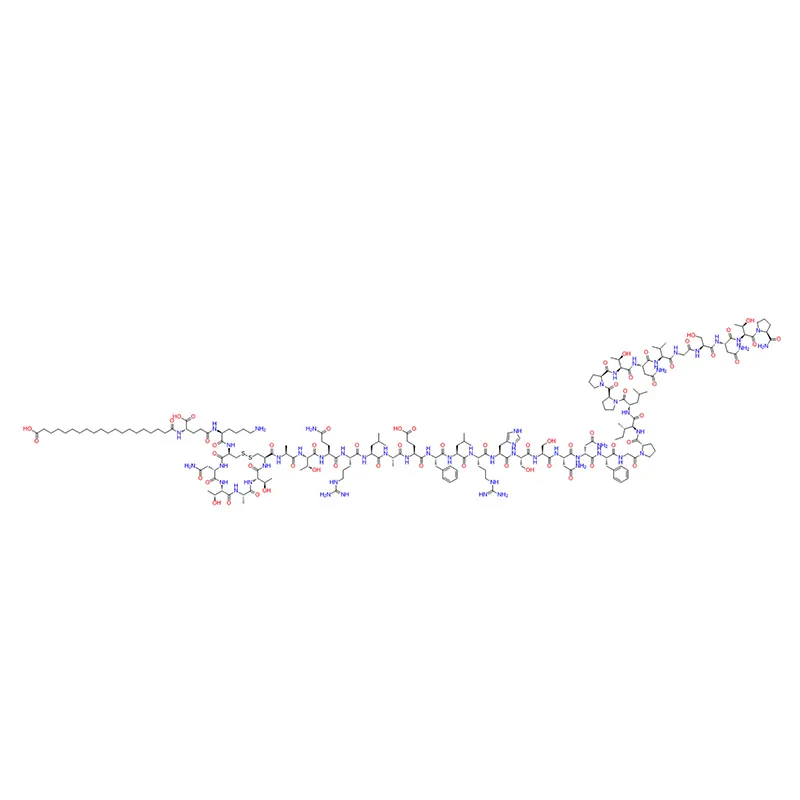
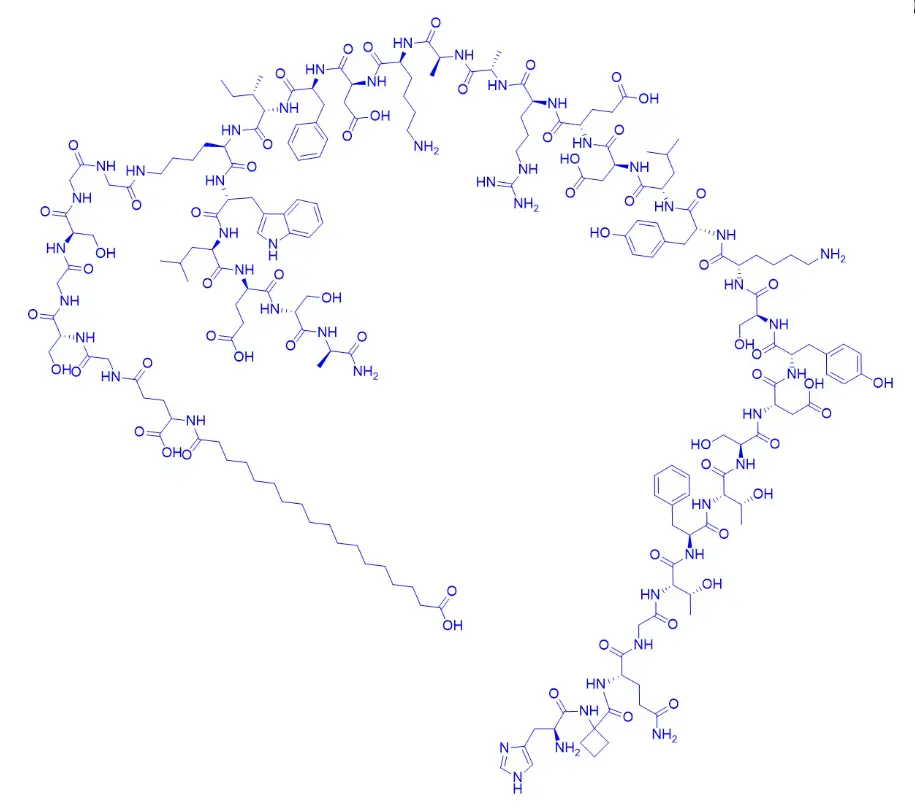
    كاجريلينتيد (1415456-99-3) هو نظير أسيليلي جديد طويل المفعول، يعمل كمنبه غير انتقائي لمستقبلات الأميلين (AMYR) ومستقبل الكالسيتونين G المقترنة بالبروتين (CTR). يمكن أن يقلل كاجريلينتيد من تناول الطعام ويؤدي إلى فقدان الوزن بشكل كبير. لديها القدرة على البحث في السمنة

    فئات:

    اتصل الآن
    حول هذا البند
    كاجريلينتيد هو ببتيد اصطناعي يحاكي عمل الأميلين، وهو هرمون يفرزه البنكرياس وينظم مستويات الجلوكوز في الدم والشهية. وهو يتألف من 38 حمض أميني ويحتوي على رابطة ثاني كبريتيد. يرتبط كاجريلينتيد بكل من مستقبلات الأميلين (AMYR) ومستقبلات الكالسيتونين (CTR)، وهي مستقبلات مقترنة بالبروتين G يتم التعبير عنها في أنسجة مختلفة، مثل الدماغ والبنكرياس والعظام. من خلال تنشيط هذه المستقبلات، يمكن أن يقلل كاجريلينتيد من تناول الطعام، ويخفض مستويات الجلوكوز في الدم، ويزيد من إنفاق الطاقة. تم دراسة كاجريلينتيد كعلاج محتمل للسمنة، وهو اضطراب أيضي يتميز بزيادة الدهون في الجسم وزيادة خطر الإصابة بمرض السكري وأمراض القلب والأوعية الدموية والسرطان. أظهر كاجريلينتيد نتائج واعدة في الدراسات على الحيوانات والتجارب السريرية، مما يدل على فقدان كبير في الوزن وتحسين التحكم في نسبة السكر في الدم لدى المرضى الذين يعانون من السمنة المفرطة مع أو بدون مرض السكري من النوع 2.
    عرض المنتج
    IMG_20200609_154048
    IMG_20200609_155449
    IMG_20200609_161417
    لماذا تختارنا؟
    المنتج1
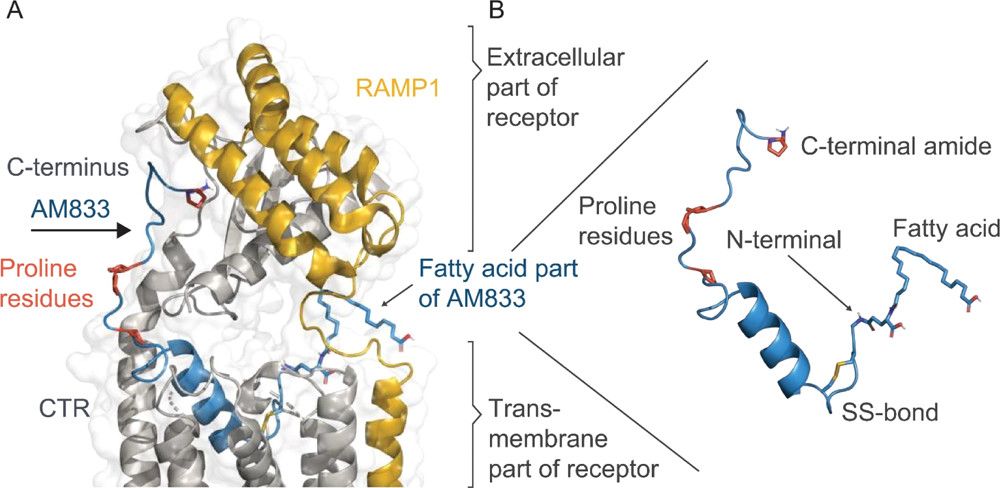
    الشكل 1. نموذج التماثل للكاجريلينتيد (23) المرتبط بـ AMY3R. (أ) يتكون الجزء N- الطرفي من 23 (الأزرق) من حلزون a برمائي، مدفون بعمق في مجال TM الخاص بـ AMY3R، بينما من المتوقع أن يتبنى الجزء C-التشكل الممتد الذي يربط الجزء خارج الخلية من المستقبل. (29،30) تم تسليط الضوء على الأحماض الدهنية المرتبطة بالطرف N المكون من 23، بقايا البرولين (التي تقلل من الرجفان)، وأميد الطرف C (الضروري لربط المستقبلات) في تمثيلات العصا. يتم تشكيل AMY3R بواسطة نسبة النقر إلى الظهور (الرمادية) المرتبطة بـ RAMP3 (بروتين تعديل نشاط المستقبل 3؛ البرتقالي). تم إنشاء النموذج الهيكلي باستخدام هياكل القالب التالية: بنية معقدة لـ CGRP (مستقبل يشبه مستقبلات الكالسيتونين؛ كود pdb 6E3Y) وبنية بلورية apo للعمود الفقري 23 (رمز pdb 7BG0). (ب) تكبير 23 درجة لتسليط الضوء على رابطة ثاني كبريتيد N-terminal، وجسر ملح داخلي بين البقايا 14 و17، و"شكل سحاب الليوسين"، ورابطة هيدروجينية داخلية بين البقايا 4 و11. (مقتبس من Kruse T، Hansen JL، Dahl K، Schäffer L، Sensfuss U، Poulsen C، Schlein M، Hansen AMK، Jeppesen CB، Dornonville de la Cour C، Clausen TR، Johansson E، Fulle S، Skyggebjerg RB، Raun K. تطوير Cagrilintide، نظير الأميلين طويل المفعول. ي ميد كيم. 2021 12 أغسطس؛64(15):11183-11194.)
    Some of the biological applications of cagrilintide are: Cagrilintide can modulate the activity of neurons in the hypothalamus, the brain region that controls appetite and energy balance (Lutz et al., 2015, Front Endocrinol (Lausanne)). Cagrilintide can inhibit the firing of orexigenic neurons, which stimulate hunger, and activate anorexigenic neurons, which suppress hunger. For example, cagrilintide can reduce the expression of neuropeptide Y (NPY) and agouti-related peptide (AgRP), two potent orexigenic peptides, and increase the expression of proopiomelanocortin (POMC) and cocaine- and amphetamine-regulated transcript (CART), two anorexigenic peptides, in the arcuate nucleus of the hypothalamus (Roth et al., 2018, Physiol Behav). Cagrilintide can also enhance the satiating effect of leptin, a hormone that signals the body’s energy status. Leptin is secreted by adipose tissue and binds to leptin receptors on hypothalamic neurons, inhibiting orexigenic neurons and activating anorexigenic neurons. Cagrilintide can increase the sensitivity of leptin receptors and potentiate leptin-induced activation of signal transducer and activator of transcription 3 (STAT3), a transcription factor that mediates leptin’s effects on gene expression (Lutz et al., 2015, Front Endocrinol (Lausanne)). These effects can reduce food intake and increase energy expenditure, leading to weight loss.
    المنتج2
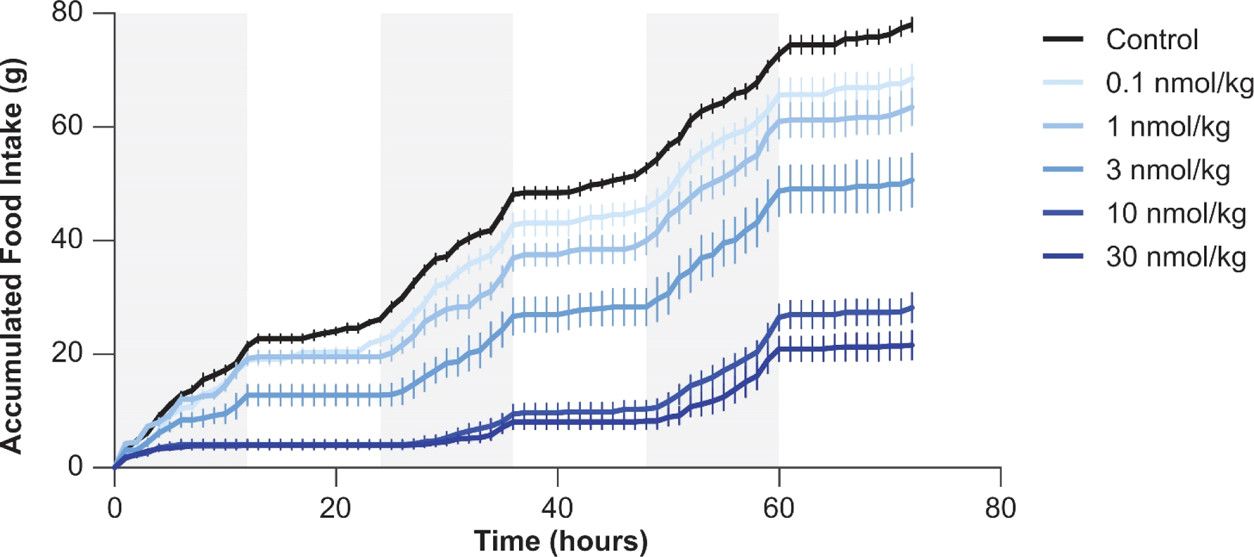
    Figure 2. Food intake in rats after subcutaneous administration of Cagrilintide 23. (adapted from Kruse T, Hansen JL, Dahl K, Schäffer L, Sensfuss U, Poulsen C, Schlein M, Hansen AMK, Jeppesen CB, Dornonville de la Cour C, Clausen TR, Johansson E, Fulle S, Skyggebjerg RB, Raun K. Development of Cagrilintide, a Long-Acting Amylin Analogue. J Med Chem. 2021 Aug 12;64(15):11183-11194.) Cagrilintide can regulate the secretion of insulin and glucagon, two hormones that control blood glucose levels. Cagrilintide can inhibit glucagon secretion from alpha cells in the pancreas, which prevents excessive glucose production by the liver. Glucagon is a hormone that stimulates the breakdown of glycogen and the synthesis of glucose in the liver, raising blood glucose levels. Cagrilintide can suppress glucagon secretion by binding to amylin receptors and calcitonin receptors on alpha cells, which are coupled to inhibitory G proteins that reduce cyclic adenosine monophosphate (cAMP) levels and calcium influx. Cagrilintide can also potentiate insulin secretion from beta cells in the pancreas, which enhances glucose uptake by the muscles and adipose tissue. Insulin is a hormone that promotes the storage of glucose as glycogen in the liver and muscles, and the conversion of glucose to fatty acids in adipose tissue, lowering blood glucose levels. Cagrilintide can enhance insulin secretion by binding to amylin receptors and calcitonin receptors on beta cells, which are coupled to stimulatory G proteins that increase cAMP levels and calcium influx. These effects can lower blood glucose levels and improve insulin sensitivity, which can prevent or treat type 2 diabetes (Kruse et al., 2021, J Med Chem; Dehestani et al., 2021, J Obes Metab Syndr.). Cagrilintide can also affect the function of osteoblasts and osteoclasts, two types of cells that are involved in bone formation and resorption. Osteoblasts are responsible for producing new bone matrix, while osteoclasts are responsible for breaking down old bone matrix. The balance between osteoblasts and osteoclasts determines the bone mass and strength. Cagrilintide can stimulate osteoblast differentiation and activity, which increases bone formation. Cagrilintide can bind to amylin receptors and calcitonin receptors on osteoblasts, which activate intracellular signaling pathways that promote osteoblast proliferation, survival, and matrix synthesis (Cornish et al., 1996, Biochem Biophys Res Commun. ). Cagrilintide can also increase the expression of osteocalcin, a marker of osteoblast maturation and function (Cornish et al., 1996, Biochem Biophys Res Commun.). Cagrilintide can also inhibit osteoclast differentiation and activity, which decreases bone resorption. Cagrilintide can bind to amylin receptors and calcitonin receptors on osteoclast precursors, which inhibit their fusion into mature osteoclasts (Cornish et al., 2015). Cagrilintide can also reduce the expression of tartrate-resistant acid phosphatase (TRAP), a marker of osteoclast activity and bone resorption (Cornish et al., 2015, Bonekey Rep.). These effects can improve bone mineral density and prevent or treat osteoporosis, a condition characterized by low bone mass and increased fracture risk (Kruse et al., 2021; Dehestani et al., 2021, J Obes Metab Syndr.)


    طلب الاستعلام

    حقوق النشر © 2025 لشركة هانغتشو هوتيد للتكنولوجيا الحيوية المحدودة. جميع الحقوق محفوظة.

    اتصل بنا

    طلب الاستعلام