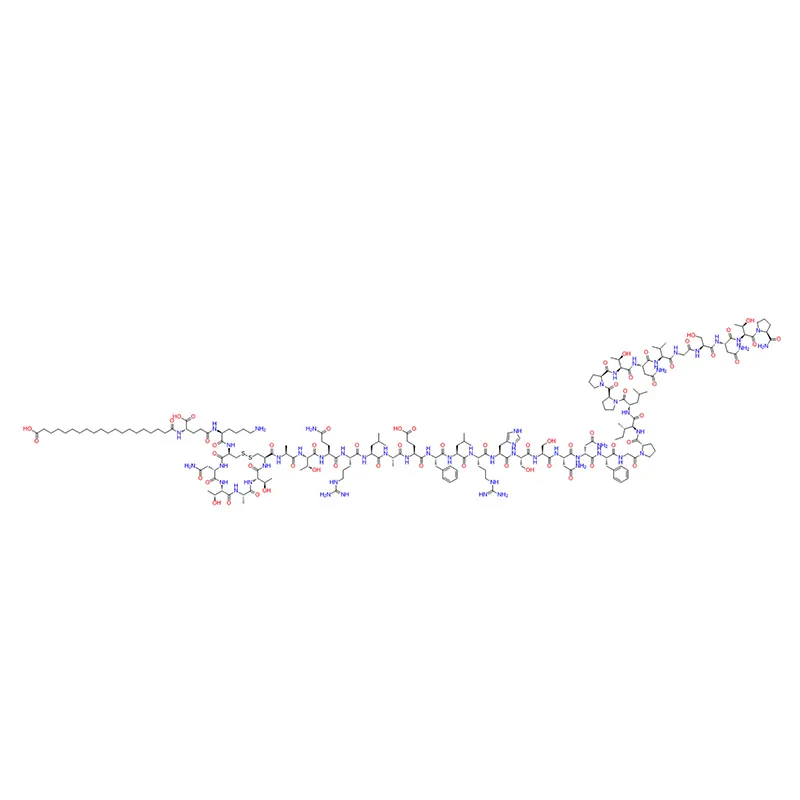
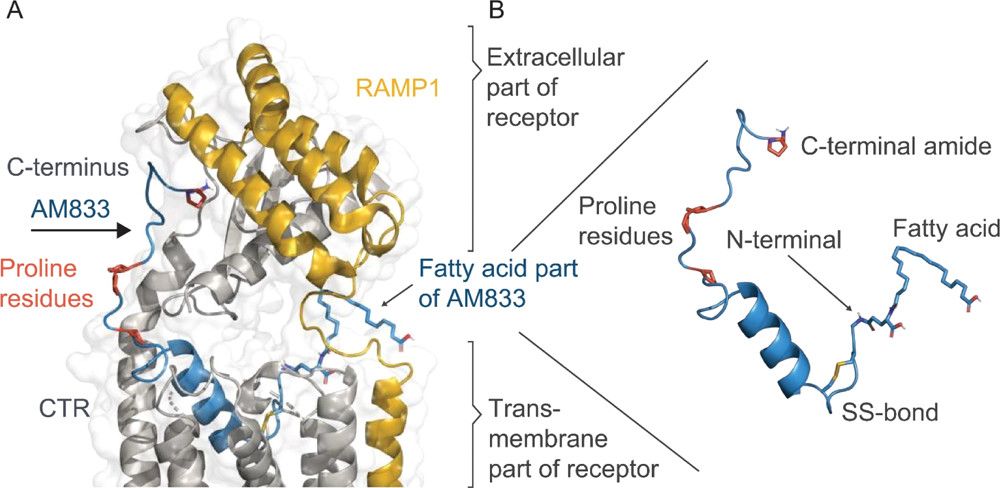
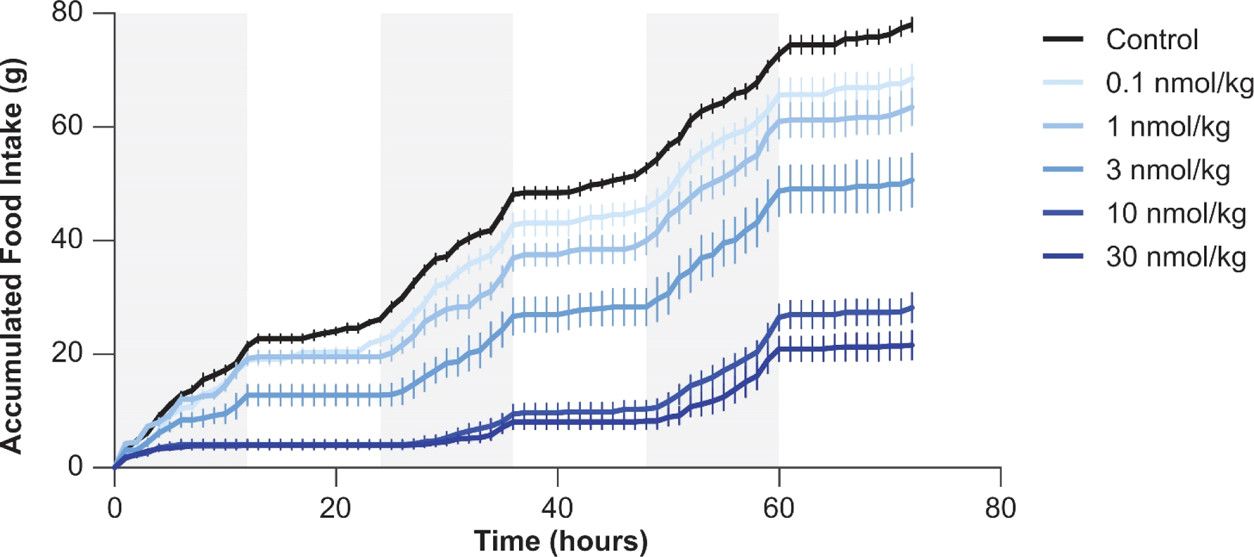
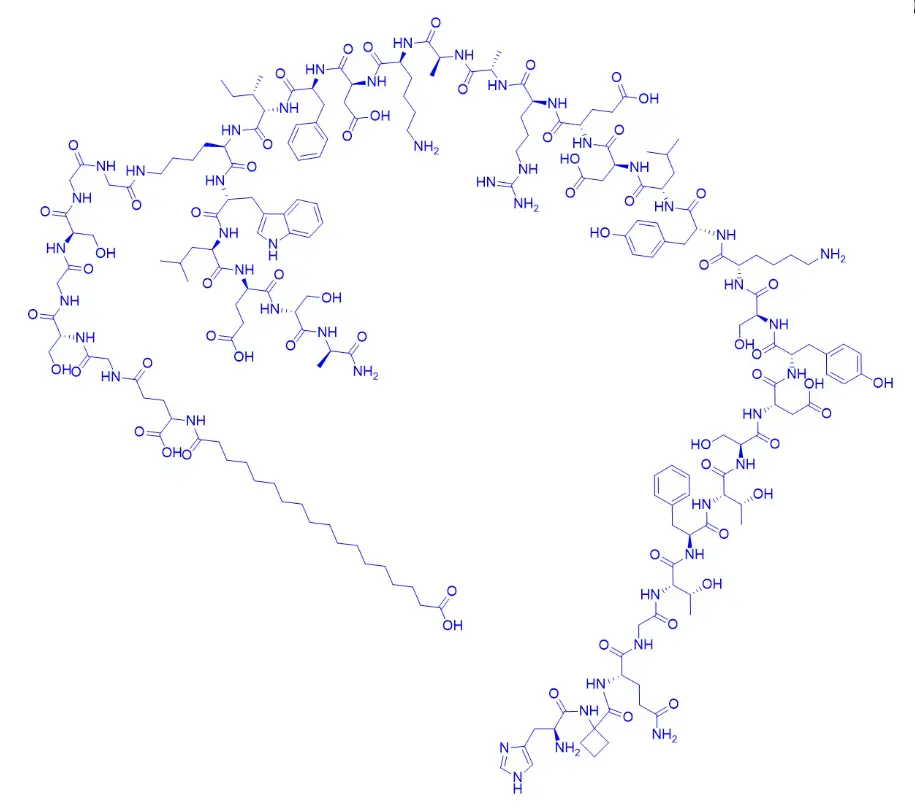
Figure 2. Food intake in rats after subcutaneous administration of Cagrilintide 23. (adapted from Kruse T, Hansen JL, Dahl K, Schäffer L, Sensfuss U, Poulsen C, Schlein M, Hansen AMK, Jeppesen CB, Dornonville de la Cour C, Clausen TR, Johansson E, Fulle S, Skyggebjerg RB, Raun K. Development of Cagrilintide, a Long-Acting Amylin Analogue. J Med Chem. 2021 Aug 12;64(15):11183-11194.)
Cagrilintide can regulate the secretion of insulin and glucagon, two hormones that control blood glucose levels. Cagrilintide can inhibit glucagon secretion from alpha cells in the pancreas, which prevents excessive glucose production by the liver. Glucagon is a hormone that stimulates the breakdown of glycogen and the synthesis of glucose in the liver, raising blood glucose levels. Cagrilintide can suppress glucagon secretion by binding to amylin receptors and calcitonin receptors on alpha cells, which are coupled to inhibitory G proteins that reduce cyclic adenosine monophosphate (cAMP) levels and calcium influx. Cagrilintide can also potentiate insulin secretion from beta cells in the pancreas, which enhances glucose uptake by the muscles and adipose tissue. Insulin is a hormone that promotes the storage of glucose as glycogen in the liver and muscles, and the conversion of glucose to fatty acids in adipose tissue, lowering blood glucose levels. Cagrilintide can enhance insulin secretion by binding to amylin receptors and calcitonin receptors on beta cells, which are coupled to stimulatory G proteins that increase cAMP levels and calcium influx. These effects can lower blood glucose levels and improve insulin sensitivity, which can prevent or treat type 2 diabetes (Kruse et al., 2021, J Med Chem; Dehestani et al., 2021, J Obes Metab Syndr.).
Cagrilintide can also affect the function of osteoblasts and osteoclasts, two types of cells that are involved in bone formation and resorption. Osteoblasts are responsible for producing new bone matrix, while osteoclasts are responsible for breaking down old bone matrix. The balance between osteoblasts and osteoclasts determines the bone mass and strength. Cagrilintide can stimulate osteoblast differentiation and activity, which increases bone formation. Cagrilintide can bind to amylin receptors and calcitonin receptors on osteoblasts, which activate intracellular signaling pathways that promote osteoblast proliferation, survival, and matrix synthesis (Cornish et al., 1996, Biochem Biophys Res Commun. ). Cagrilintide can also increase the expression of osteocalcin, a marker of osteoblast maturation and function (Cornish et al., 1996, Biochem Biophys Res Commun.). Cagrilintide can also inhibit osteoclast differentiation and activity, which decreases bone resorption. Cagrilintide can bind to amylin receptors and calcitonin receptors on osteoclast precursors, which inhibit their fusion into mature osteoclasts (Cornish et al., 2015). Cagrilintide can also reduce the expression of tartrate-resistant acid phosphatase (TRAP), a marker of osteoclast activity and bone resorption (Cornish et al., 2015, Bonekey Rep.). These effects can improve bone mineral density and prevent or treat osteoporosis, a condition characterized by low bone mass and increased fracture risk (Kruse et al., 2021; Dehestani et al., 2021, J Obes Metab Syndr.)